

Dental labs · clinics · dental technology
Dental software development: platforms, 3D viewers and practice systems
In shortWeDevelop is a Romanian software company that builds dental software, including Smatch, a marketplace for dental CAD design, and Smatch Cases, where dentists and technicians review scans and CBCT in a browser-based 3D viewer. It fits labs, dental technology companies and clinic groups with a workflow that existing tools do not cover. A single practice is usually better served by a configured system.
At a glance
- Provider
- WeDevelop, a software company from Romania
- Clients
- Romania, the EU, the UK and North America
- Languages
- English and Romanian
- Invoicing
- EUR, GBP or RON
- Pricing
- Quoted after scoping, from your brief
- Contact
- office@wedevelop.ro
01Is this for you
Who should consider custom dental software
Dentistry already has good tools for scanning, design and manufacture. Custom work makes sense in the gaps between them.
- Labs, clinics and designers exchange cases through chat groups, email attachments and blurry photos.
- You are launching a dental product or marketplace, and need the platform built rather than a team hired.
- People need to inspect a 3D model or a CBCT in a browser, without installing software or sending files around.
- A group of clinics or labs wants one workflow across sites, and no product follows it.
- Your clinical data must stay private and only verified professionals may see it.
02Proof
What we have built for dentistry
Smatch and Smatch Cases are the core of this experience. DentElite shows the clinic-facing side.
3D in the browser
Smatch lets a lab turn a design, check margins and request changes before accepting it, with no software to install.
Meshes and CBCT together
The Smatch Cases viewer renders STL and PLY meshes and CBCT volumes in one layered scene, built on Three.js and WebGL.
A job workflow both sides trust
Smatch runs from job posting and bids through design upload, change requests and validation to download, with per-project chat.
Payments across borders
Stripe holds client payments until the lab accepts the work, and Trolley handles payouts and tax forms for designers in many countries.
Private by construction
On Smatch Cases, credential checks gate membership, cases live behind authentication, and only the product story is public. It launched in free beta.
A clinic website
DentElite: treatments around a digital workflow, team, price list and courses, with booking actions on every page, maintained by the clinic itself.
03Which option
Existing dental tools, a configured system or a custom platform
Most dental businesses do not need custom software. Here is how to tell which group you are in.
| Option | Fits when | Trade-off |
|---|---|---|
| Existing dental and CAD software | Your need is scanning, design or manufacture itself, and your team already works well inside those tools. | Each tool does its job, but sharing between people often falls back on exporting files and messaging. |
| Our configured appointment system | You run a practice or clinic and need calendars per room and device, patient files, invoicing and stock. | It is a practice system. Dental imaging and lab workflows are not among its listed modules. |
| Clinic website with booking | The practice runs fine, but you want more patients to understand your treatments and book. | It brings patients in, but does nothing for the way the practice runs behind the front desk. |
| Custom platform | The workflow between labs, clinics or designers is the product, or it gives you a real edge. | It takes serious engineering, 3D work is demanding, and you own the system long term. |
We do not build CAD design or scanner software, and we would advise against replacing those tools with custom code. Our work is the platform around the files: viewing, discussing, approving and paying.
04Cost
What decides the cost of dental software
Dental projects are often more expensive than they look at first, largely because of the files. These items matter most.
| Factor | Why it matters |
|---|---|
| 3D viewer scope | Showing a mesh is one thing. Layers, annotations and comparing versions each add real engineering. |
| CBCT handling | Volume rendering in a browser is a much larger job than a surface model, and has to stay usable on ordinary computers. |
| File pipeline | Uploads must be validated, converted and assembled, and the formats your users actually send decide how much work this is. |
| Marketplace logic | Bids, milestones, change requests and reviews have to work for both sides of the deal. |
| Payments and payouts | Holding funds until acceptance and paying people in many countries adds providers, tax forms and edge cases. |
| Verification and privacy | Credential checks, private cases and access rules protect the users, and they have to be designed in from the start. |
A single quote from a short brief would be fiction for work like this. Discovery is fixed in price and produces a specification, an architecture and a costed backlog, and from there you can take a fixed-scope quote for the first release or a monthly team rate.
05How to start
How a dental software project begins
Describe the workflow
Who sends what to whom today, where it breaks and who would pay for fixing it.
Share sample files
Anonymised examples of the scans and volumes your users work with, so that feasibility is tested on real formats.
Discovery
A written specification, architecture, risk list and costed backlog, which you own whether or not you continue with us.
Build in sprints
Two-week sprints with working software on staging, and a demo you can click through with real dentists or technicians.
06For a useful answer
What to tell us
We need the workflow more than the feature list. Please remove patient details from anything you send.
- Who the users are: dentists, technicians, designers, patients or a mix.
- The file types involved, such as STL, PLY, CBCT or photos, and their typical size.
- Whether money changes hands on the platform, and between which countries.
- How users would be verified, and who must never see a case.
- Whether this is an internal tool or a product you will sell.
07Questions
What dental businesses and founders ask
How much does custom dental software cost?
The biggest drivers are the 3D viewer, CBCT handling, marketplace logic and payments, so we price after a fixed-price discovery rather than from a brief. A clinic that only needs booking and patient files should look at a configured product instead, which costs far less to start.
How long does it take to build a dental platform?
There is no fair single figure, because a viewer alone and a two-sided marketplace with payouts are very different projects. The timeline comes out of discovery, and it usually gets shorter when the first release is cut down to one complete workflow for one kind of user.
Can dentists view scans in a browser without installing anything?
Yes, that is exactly what we built on Smatch and Smatch Cases, using Three.js and WebGL. STL and PLY meshes open directly in the browser with layer controls, so a colleague can inspect a case from a link once they have signed in.
Can you work with CBCT data?
Yes, Smatch Cases renders CBCT volumes together with surface meshes in the same scene. Send us anonymised samples of what your scanners export, and we will confirm how your specific formats behave before anyone commits to a plan built on assumptions.
We are one dental practice. Do we need custom software?
Almost certainly not, and we would tell you so. A configured appointment and management system covers booking, patient files, invoicing and stock, and a good website brings the patients, as DentElite shows, without you owning a custom codebase.
Who owns the code on a custom dental platform?
You do, from the first commit, and the repository and infrastructure can sit in your own accounts. The documentation is written so another team can take over, which matters for founders who may later hire their own engineers or face investor due diligence.
Is a dental case viewer a medical device?
That depends on its intended purpose, for instance whether it is meant to support diagnosis or only collaboration, and this should be answered by a regulatory specialist. Getting that opinion early is cheaper, because the answer can change your documentation and process.
08Related projects
Work we have done in this area
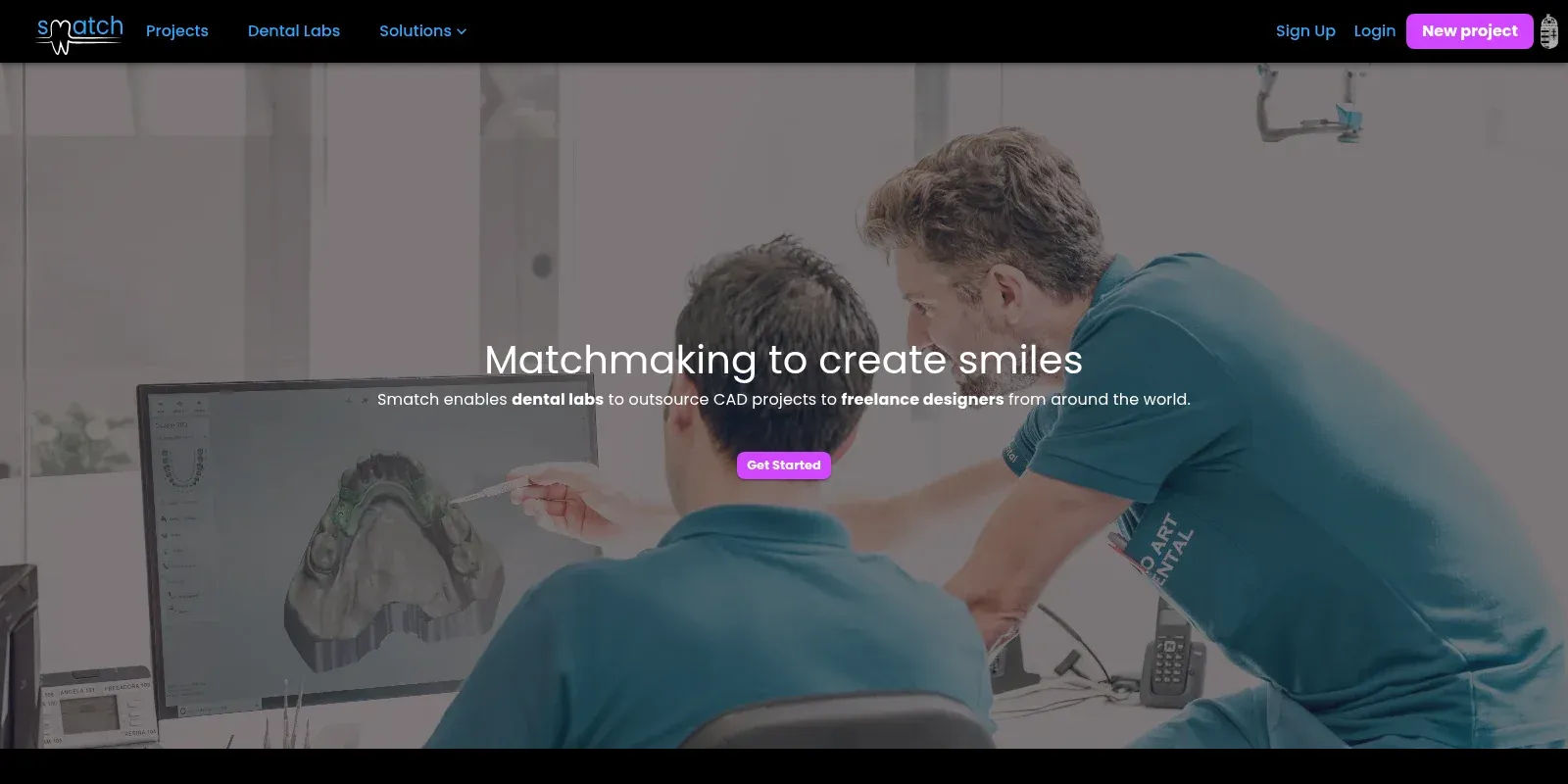
Smatch — global marketplace for dental CAD design
A two-sided platform where dental labs post CAD design jobs and freelance designers from around the world bid, deliver and get paid — with 3D preview, per-project chat and milestone payments.
Next.jsReactWebGL 3D previewStripeView case study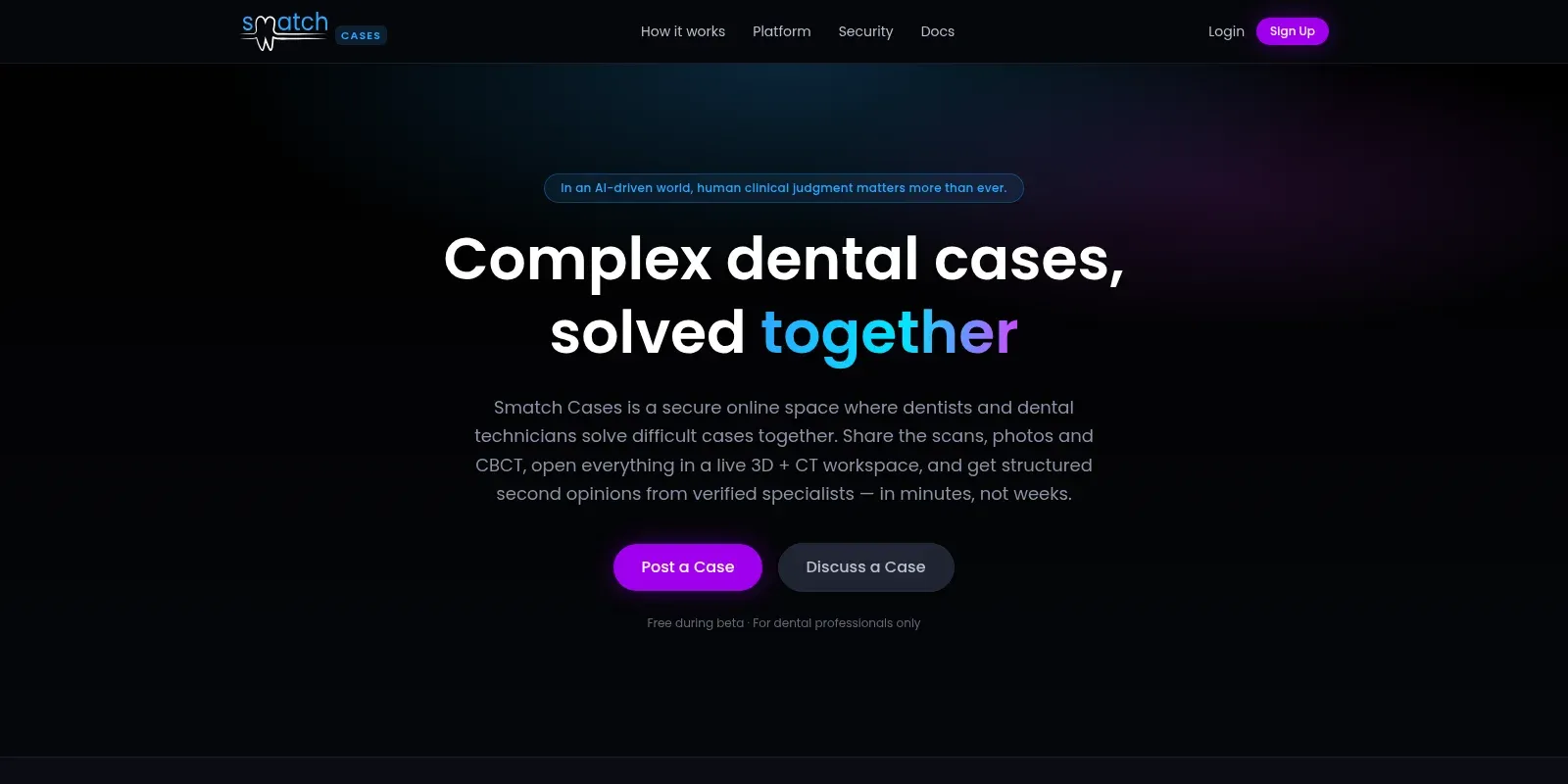
Smatch Cases — clinical case collaboration with a live 3D + CT workspace
A secure platform where dentists and dental technicians solve complex cases together: upload scans, photos and CBCT, open them in a layered 3D + CT viewer in the browser, and collect structured second opinions from verified specialists.
Next.jsReactThree.js / WebGLCBCT volume renderingView case study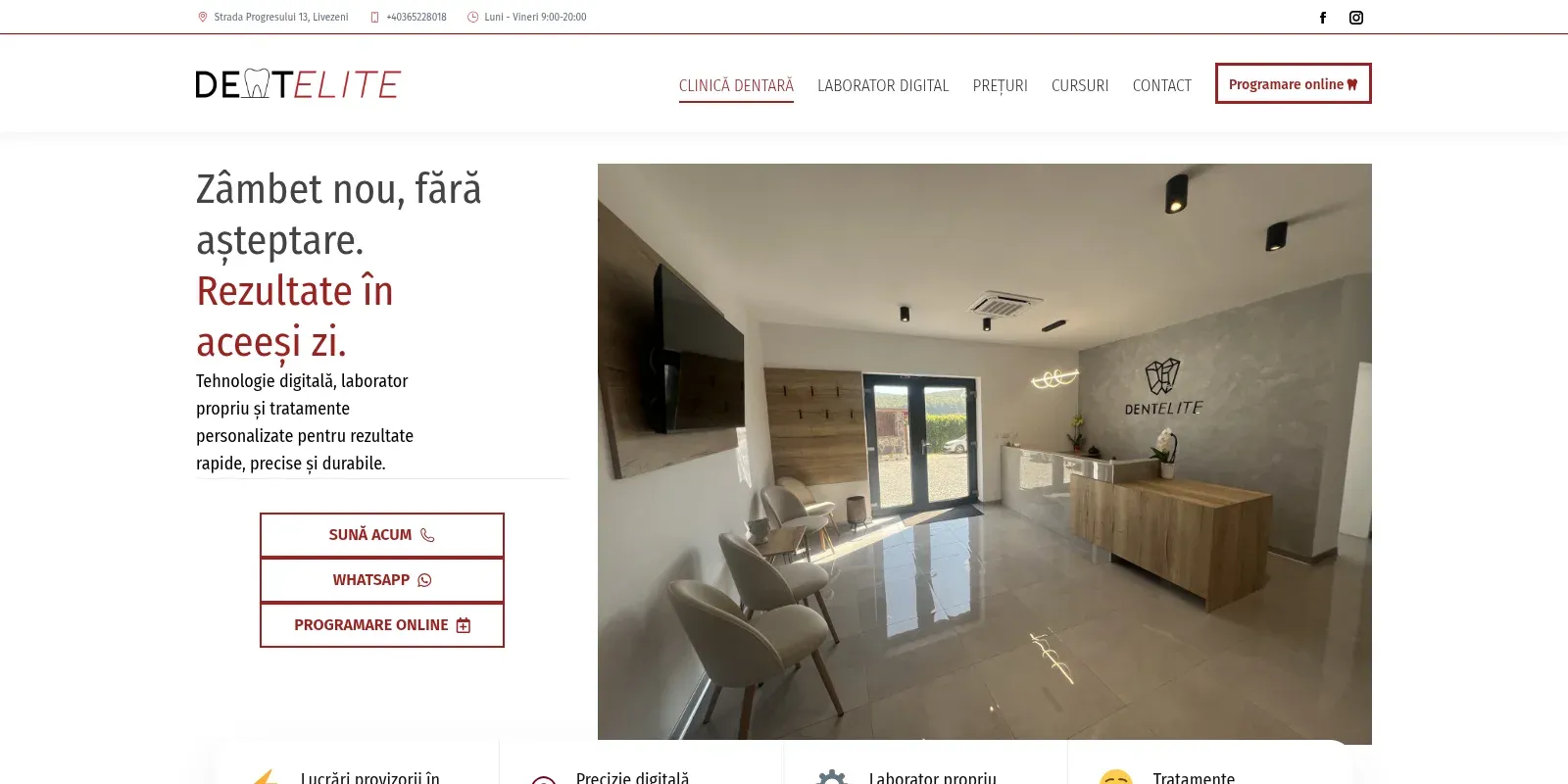
DentElite — dental clinic site with online booking
Website for a digital implantology clinic near Târgu Mureș with its own dental lab: treatments, team, prices, courses, gallery and social feeds, with call, WhatsApp and online-booking entry points on every page.
WordPressThe7 themeWPBakeryOnline bookingView case studyRequest a quote
Describe what you need. The enquiry goes to our team, and we reply by email with the next step.