

Distributors · wholesale · trade customers
B2B ecommerce for distributors: platform, price lists and ERP links
In shortWeDevelop is a Romanian software company that builds and maintains B2B online stores on Magento 2, WooCommerce or custom Next.js storefronts, connected to the systems a distributor already runs. Its portfolio covers fasteners, medical supplies, packaging and IT equipment. It fits distributors whose customers reorder often, search by technical specification and expect their own prices and accounts.
At a glance
- Provider
- WeDevelop, a software company from Romania
- Clients
- Romania, the EU, the UK and North America
- Languages
- English and Romanian
- Invoicing
- EUR, GBP or RON
- Pricing
- Quoted after scoping, from your brief
- Contact
- office@wedevelop.ro
01Is this for you
When a distributor needs more than a retail webshop
Trade customers do not browse like consumers. They know the part, they reorder it and they expect their terms. These are the signs that matter.
- Your sales staff retype orders that arrive by phone, email or Excel.
- Customers are on different price lists, and a public price would be wrong for most of them.
- Products are bought by standard, size or compatibility, so a flat category list does not help anyone.
- Stock and prices change daily, and keeping them correct by hand has become someone's job.
- Some customers order on account, while others should pay online or ask for a quote first.
02Proof
The distributor problems we have already solved
Each item below comes from a store in our portfolio. The stack differs from one to the next, because the problems did.
Catalogue by standard
Surub Optim, on Magento 2: fasteners organised by DIN and ISO family, with attributes for grade, coating and dimensions, so tradespeople find the exact part.
Institutional customers
Medisens, on Magento 2: customer groups for institutional buyers and a category structure that follows clinical use, such as wound care and equipment by department.
Back-office sync
Also Medisens: integrations we built for product and stock synchronisation, price list updates and order export into the systems staff already use.
Invoicing without typing
Cargoart, on WooCommerce: automatic invoicing through SmartBill and card payments through Netopia, in a store with standard and custom-printed products.
Finding by compatibility
Doctor PC Shop, on a custom Next.js storefront: a toner finder by printer model and a PC configurator, with consumer and company orders in one catalogue.
Buying by quote
Oraș Smart, on Next.js: configurators and quote requests for buyers who compare specifications and never use a cart. We also maintain the Montigen store, which we did not build.
03Which option
Magento 2, WooCommerce or a custom storefront
We have shipped all three for B2B catalogues, so here is how we separate them for a distributor.
| Platform | Fits when | Trade-off |
|---|---|---|
| Magento 2 | Large catalogues, complex price rules, several warehouses or a heavy dependence on an ERP. | More demanding to host and maintain, and it needs specialist developers for its whole life. |
| WooCommerce | Small to mid-sized catalogues with simple pricing, and a team already at home in WordPress. | Complex price logic relies on extensions or custom code, and this reaches its limit sooner. |
| Custom Next.js storefront | Your buying journey is unusual, such as finders and configurators, or one frontend has to serve several backends. | The most custom code to own, so it has to earn its cost through a measurable difference. |
| Quote-led catalogue | Buyers need specifications and documentation, and the order is negotiated rather than placed. | No instant checkout, so the sales team stays in the loop for every deal. |
If you have one price list, a few hundred products and customers who pay by card, you do not need a B2B project at all. A simple store is the honest answer, and you can revisit the decision once the price lists arrive.
04Cost
What decides the cost of a distributor's store
The number of pages hardly matters. In a B2B store, the money goes into these items.
| Factor | Why it matters |
|---|---|
| Price logic | Contract prices, customer groups, volume discounts and currencies all have to agree at every step of the order. |
| ERP integration | Stock, prices and orders need a data contract, error handling and reconciliation, and this is often the largest item. |
| Catalogue data | Attributes that exist only in someone's head or in a spreadsheet must be cleaned and structured before any filter can work. |
| Customer accounts | Company hierarchies, approval by a buyer, credit limits and order history add logic that has to be tested per role. |
| Finders and configurators | A compatibility finder or a configurator is a small application of its own, on top of the store. |
| Migration | An existing store means URL mapping, customer accounts and order history to bring across without losing search traffic. |
You get a fixed-scope estimate after an audit of the existing store or a discovery phase for a new one. We will not quote a full build from a one-page brief, because that number would be a guess presented as a commitment.
05How to start
From the first email to the first trade order
Send the basics
Your catalogue size, how customers order today and the system holding your stock and prices.
Audit or discovery
We check the data, the current store if there is one and what the back office can expose, and write down the findings.
Choose the first release
Usually the catalogue, accounts and pricing go first, with the deepest integrations sequenced after them so the store earns its keep sooner.
Build in sprints
Two-week sprints on staging, with automated tests around checkout, pricing and integrations, then a pilot with a few real customers.
06For an accurate quote
What to include in your request
Your sales manager and whoever runs the ERP can answer these between them.
- The approximate number of products and how clean the attribute data is.
- How many price lists or contract prices exist, and how they are decided.
- The ERP or back-office system, and whether it has an API or an export.
- How orders are paid today: on account, card, proforma or quote.
- Your current store address, if there is one, and how much of its search traffic matters.
07Questions
What distributors ask before building a B2B store
How much does a B2B online store cost for a distributor?
It is driven by price logic, ERP integration, catalogue data and customer accounts far more than by the number of pages, so we quote after an audit or discovery phase. A store with one price list and no integration is a very different job from one with contract pricing and a live ERP link.
How long does a B2B ecommerce project take?
Moving a mid-sized catalogue with a handful of integrations to Magento 2 usually takes three to five months, and very large catalogues with ERP-driven pricing run six to nine. For a new build, the timeline follows from your integrations and data, and it is set after discovery.
Can each customer see their own prices?
Yes, through customer groups, company accounts and contract pricing, and Medisens serves institutional buyers in this way. The harder question is where those prices live today, because they should be read from your ERP rather than maintained a second time in the store.
Do we need the ERP integration from day one?
Not always, because a store can launch with scheduled imports and take on a live integration in a later release. It does mean someone watches the data in the meantime, and if stock or prices change several times a day, the integration should come first.
Can customers still ask for a quote instead of ordering by cart?
Yes, and for some products that is the only way they will buy. Magento supports negotiated quotes in B2B setups, and on Oraș Smart we built quote requests tied to a configured product, for buyers who need documentation before they commit.
Which ERP can you connect a store to?
Any system that has an API or a reliable export, and the work is scoped once we know which one you run. We also develop our own ERP for Romanian companies, which matters only if you are replacing your current one, so there is no need to switch just to get a store.
Is Magento too much for a mid-sized distributor?
Sometimes yes, particularly with a mid-sized catalogue, simple pricing and a team already using WordPress, which is why Cargoart runs on WooCommerce. Magento pays for its complexity once price rules, warehouses and ERP dependence become central, as they did for Medisens.
08Related projects
Work we have done in this area
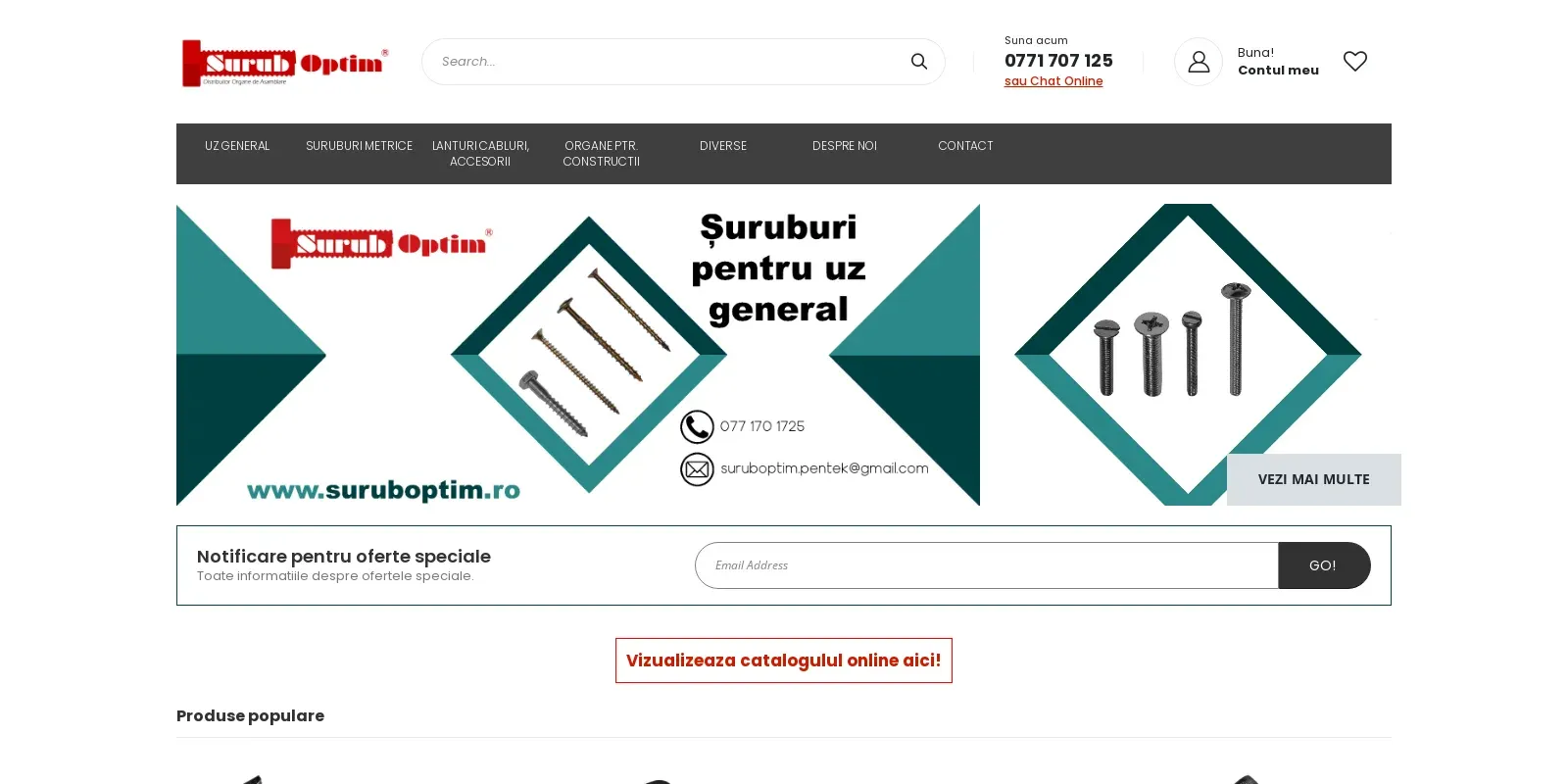
Surub Optim — B2B fastener webshop on Magento 2
Online catalogue and webshop for a fastener distributor from Târgu Mureș: thousands of DIN/ISO screws, nuts, washers, chains and anchors, organised so a tradesperson finds the right standard in two clicks.
Magento 2 Open SourcePHPMySQLPorto themeView case study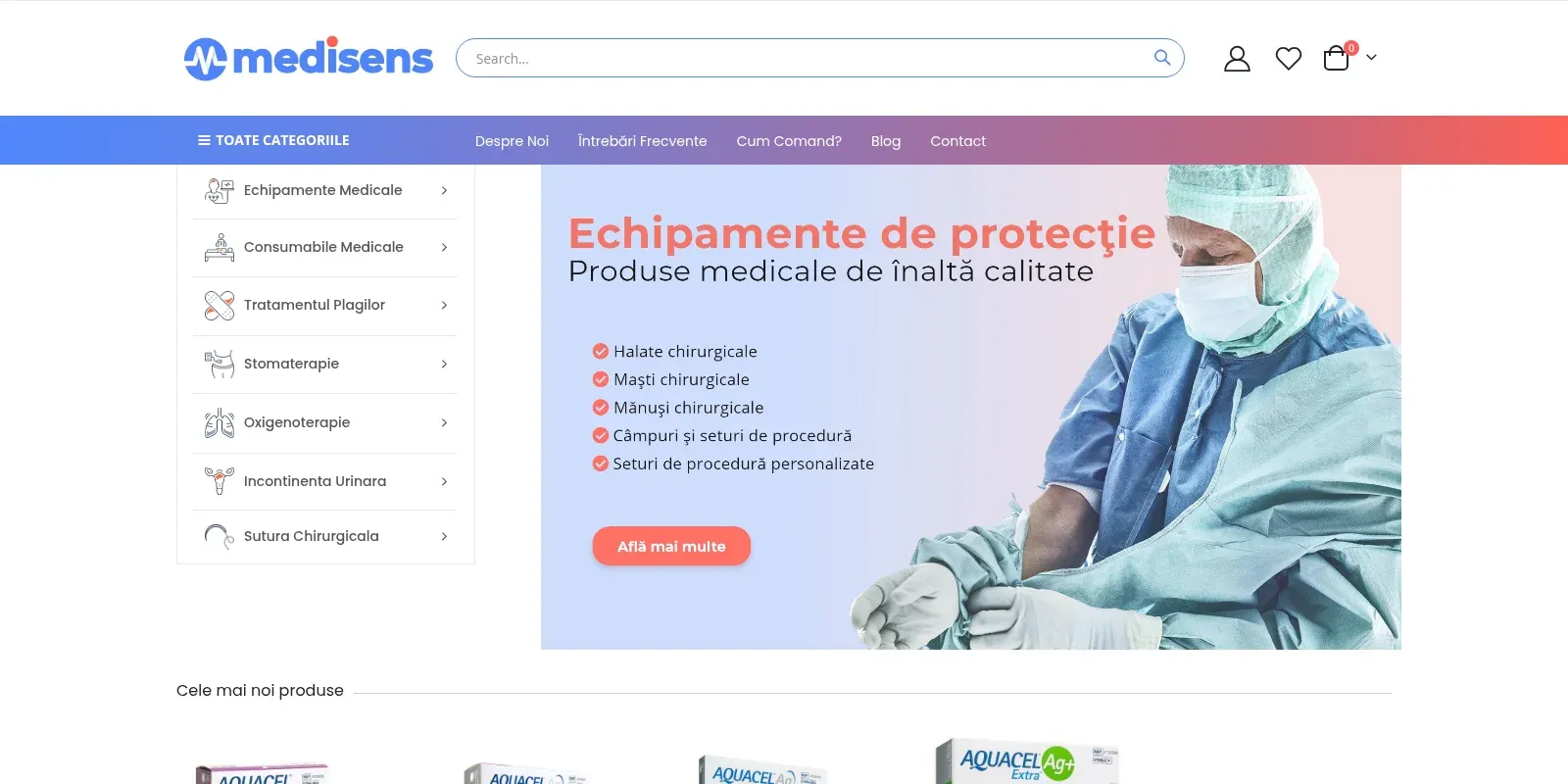
Medisens — medical products webshop with external system integrations
Magento 2 store for a distributor of medical products to hospitals and patients — wound care, incontinence, operating-theatre equipment, oxygen therapy, sutures, stoma care — connected to the company’s external business systems so stock, prices and orders stay in sync.
Magento 2Porto themePHPMySQLView case study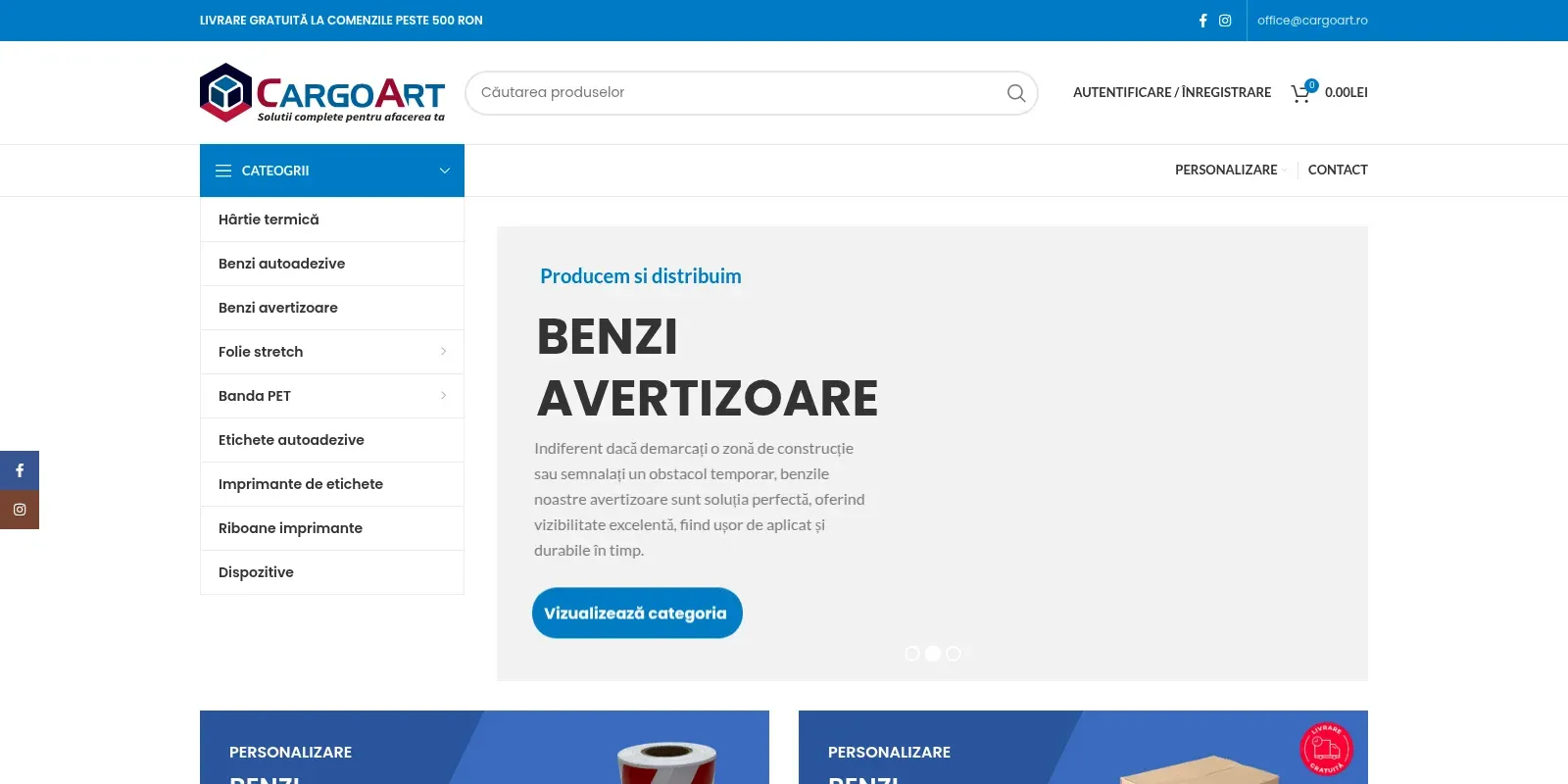
Cargoart — packaging supplies webshop with custom-printed tapes
WooCommerce store for a producer and distributor of packaging materials — thermal paper rolls, adhesive and warning tapes, stretch film, strapping, labels and label printers — including personalised printed tapes ordered online.
WordPressWooCommerceWoodmart child themeWPBakeryView case study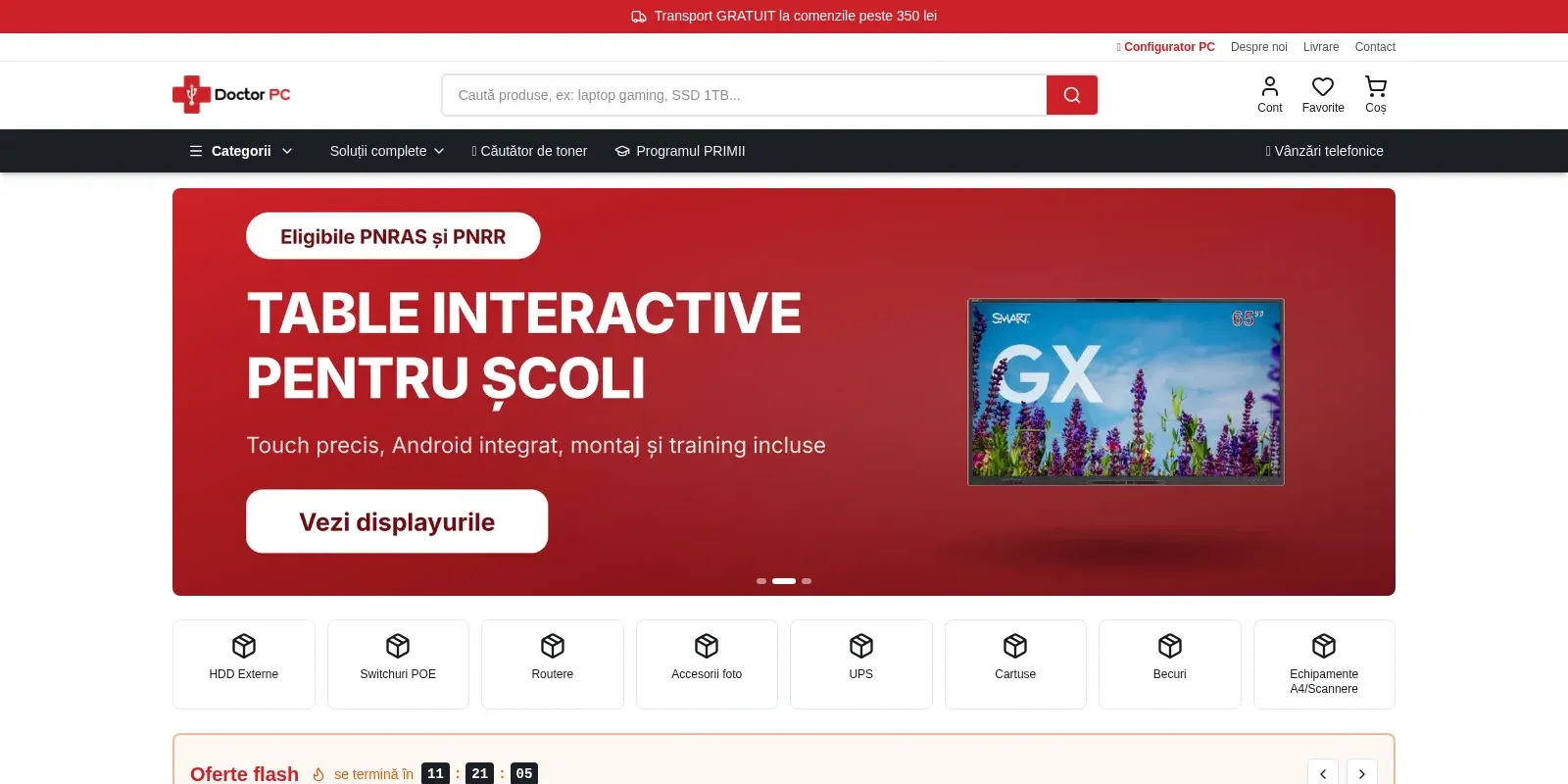
Doctor PC Shop — IT & electronics store with PC configurator and toner finder
Online store for an IT company from Târgu Mureș: laptops, PCs, components, printers and consumables, plus B2B lines such as digital-signage totems, self-ordering kiosks and servers — with a PC configurator, a toner finder by printer model and flash offers.
Next.jsReactCustom storefrontHeadless commerce backendView case studyRequest a quote
Describe what you need. The enquiry goes to our team, and we reply by email with the next step.