

Gateways · PSD2 · Reconciliation
Payment gateway and banking integration for shops and platforms
In shortWeDevelop is a Romanian software company that integrates payment gateways such as Netopia, EuPlatesc, PayU, Stripe, Mollie and Adyen, plus PSD2 bank connections and statement reconciliation, into online shops and custom applications. It fits businesses in Romania and abroad where the hard part starts after checkout: refunds, recurring charges, settlement files and finance teams matching payments by hand.
At a glance
- Provider
- WeDevelop, a software company from Romania
- Clients
- Romania, the EU, the UK and North America
- Languages
- English and Romanian
- Invoicing
- EUR, GBP or RON
- Pricing
- Quoted after scoping, from your brief
- Contact
- office@wedevelop.ro
01Is this for you
When a payment integration needs more than a plugin
A standard shop with one processor and modest volume may need nothing beyond the official plugin for its platform. Custom work starts to pay off when several of these apply.
- Finance matches payments to orders and invoices by hand at the end of each month.
- Refunds and chargebacks are handled outside your system and leave records that do not agree.
- You sell subscriptions and lose customers to failed renewals rather than to cancellations.
- You run a marketplace and have to split money between sellers or pay people in several countries.
- You want balances and bank transactions inside your own system instead of a portal someone logs into.
02What you get
What a payment integration covers
Taking the first card payment is usually the small part of the project. The rest is what keeps the books correct.
Gateway integration
Card and wallet payments in Magento, WooCommerce or a custom application, with 3-D Secure 2, saved cards and webhooks that survive retries.
Subscriptions and dunning
Recurring billing, retries timed by decline reason, card updater flows and customer notifications in their own language before access is suspended.
Split payments and payouts
Marketplace settlement across several sellers, payout automation and the records each party needs afterwards.
Bank connections
PSD2 account data and payment initiation through licensed providers, corporate bank interfaces where they exist, and MT940 or CAMT.053 statement import.
Reconciliation
Settlements, fees and chargebacks matched to orders, invoices and the ERP, with only the real exceptions queued for finance.
Refunds, disputes and fraud rules
Workflows for refunds and chargebacks, fraud rules, an SCA exemption strategy and exports your accountant and auditor can use.
03Which option
Local gateway, international processor, open banking or statement files
These are different rails, and many businesses end up using two of them. The choice depends on where your customers are and what happens to the money afterwards.
| Option | Fits when | Trade-off |
|---|---|---|
| Processor active in Romania (Netopia, EuPlatesc, PayU) | Most of your sales are domestic, and local card acceptance and domestic cost matter most. | Check cross-border sales, subscriptions and API features against your needs before committing. |
| International processor (Stripe, Mollie, Adyen) | You sell across borders, bill subscriptions or want a stronger developer experience. | Domestic cost may be less favourable, so compare effective rates on your own transaction mix. |
| PSD2 open banking through a licensed provider | You want account data or payment initiation inside your own system. | Coverage depends on the bank and the provider, and it does not replace card acceptance. |
| Statement files (MT940, CAMT.053) | Your bank has no usable API, or you want a dependable fallback for reconciliation. | Data arrives as periodic files rather than live, and it can only report money that has already moved. |
How card data is captured is a separate choice. With hosted fields or a redirect the card details never touch your servers, which normally keeps you in SAQ-A, the lightest PCI DSS bracket. Your acquirer confirms what applies to you.
04Cost
What decides the cost of a payment integration
We quote once the money flows are listed, since a hosted checkout and a marketplace with payouts are very different projects. These factors matter most.
| Factor | Why it matters |
|---|---|
| Payment flows beyond the sale | Refunds, partial captures, chargebacks and failed payments each need their own path and their own tests. |
| Recurring billing | Dunning, retry schedules, SCA exemptions and card updates add logic that a one-off checkout does not have. |
| Split payments and payouts | Several sellers or payees mean settlement rules, tax documents and more edge cases. |
| Reconciliation depth | Matching settlements and fees to orders is one level of work, and carrying the result into the ERP or accounting system is another. |
| Your platform | A maintained module on Magento or WooCommerce needs less work than a custom application with its own order model. |
| Bank connectivity | A licensed PSD2 provider, a bank's corporate interface and statement files each need different work, and availability depends on your bank. |
Processor and bank fees are charged by those providers and are separate from the integration. When choosing a provider, we compare effective rates on your real transaction mix rather than list prices.
05How to start
From manual matching to a closed loop
Describe how money moves today
Your platform, payment methods, markets, bank, and how invoices and refunds are handled at the moment.
Choose providers
We compare coverage of your payment methods, API quality, settlement timing and dispute handling, then recommend a provider or say to keep the one you have.
Merchant setup and sandbox
You open or extend the merchant account with the provider, and the integration starts in its test environment.
Build, test and go live
Declines, 3-D Secure, refunds and repeated webhooks are tested before launch, with monitoring of failed payments and alerts from day one.
06For an accurate quote
What to include in your request
Knowing the flow of money matters more here than a feature list.
- Your shop or application platform, and the payment methods you use now.
- Rough volumes, average order value and the countries you sell in.
- Your bank, and whether it offers API access to company accounts.
- How invoices, refunds and chargebacks are handled today and by whom.
- Whether you need subscriptions, split payments or payouts to third parties.
07Questions
Questions buyers ask about payment and banking integration
How much does payment gateway integration cost?
The cost depends on the flows around the sale rather than the gateway itself: refunds, subscriptions, split payments and reconciliation. It is quoted once those are listed, and provider fees stay separate because you pay them directly to the processor.
How long does it take to integrate a payment gateway?
It depends less on the code than on merchant approval by the provider, your platform and how many flows follow the first card payment. A hosted checkout is a far smaller job than subscriptions with reconciliation, so we give a timeline once the flows are known.
Should we use Netopia or Stripe?
Mostly domestic card sales usually point to a processor active in Romania, such as Netopia, while cross-border sales and subscriptions tend to point to Stripe. Some businesses run both, and the comparison should use effective rates on your own transaction mix.
Do we need a PCI DSS audit to take card payments?
Usually not a full audit, if card data never reaches your servers. Hosted fields or a redirect normally keep you in SAQ-A, a self-assessment questionnaire, so the obligation is much lighter. Your acquirer confirms the level, and we design the integration to keep that scope small.
Can bank payments be matched to invoices automatically?
Yes, by importing statements through PSD2 or MT940 and CAMT.053 files and matching each incoming transfer to an open invoice. Partial payments and missing references go to an exception queue, so finance reviews only those cases rather than the whole statement.
Have you built payment integrations on live projects?
Yes. Cargoart's WooCommerce store takes card payments through Netopia and invoices through SmartBill, and the Smatch marketplace uses Stripe to hold client payments until the lab accepts the work, with Trolley handling payouts to designers in many countries.
How can we reduce failed subscription payments?
Use a dunning process rather than a single retry: timing based on the decline reason, automatic card updates where the network supports them, notices in the customer's language and a grace period. All of this is built into the billing flow, so nobody has to chase customers by hand.
08Related projects
Work we have done in this area
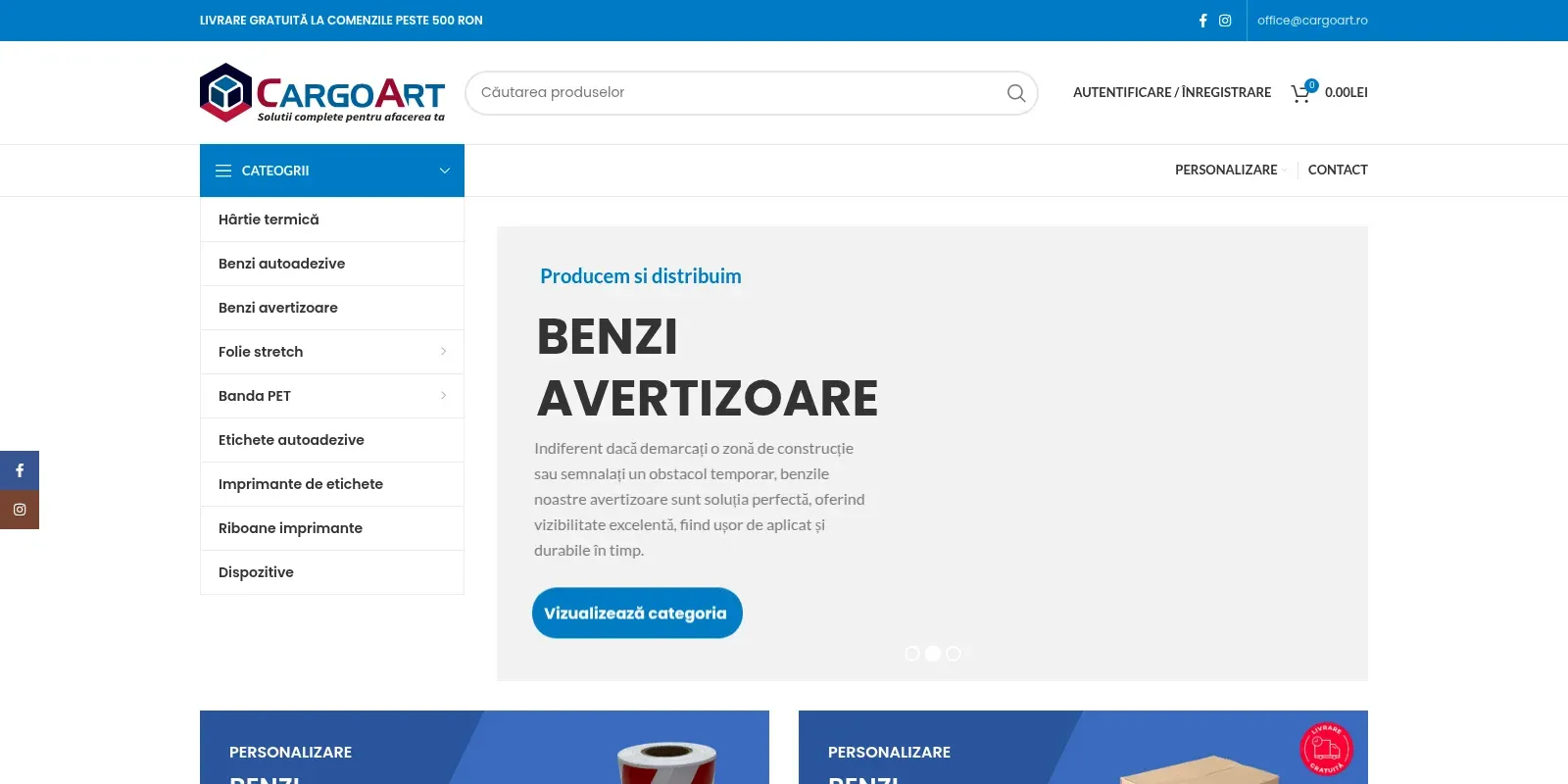
Cargoart — packaging supplies webshop with custom-printed tapes
WooCommerce store for a producer and distributor of packaging materials — thermal paper rolls, adhesive and warning tapes, stretch film, strapping, labels and label printers — including personalised printed tapes ordered online.
WordPressWooCommerceWoodmart child themeWPBakeryView case study
Smatch — global marketplace for dental CAD design
A two-sided platform where dental labs post CAD design jobs and freelance designers from around the world bid, deliver and get paid — with 3D preview, per-project chat and milestone payments.
Next.jsReactWebGL 3D previewStripeView case studyRequest a quote
Describe what you need. The enquiry goes to our team, and we reply by email with the next step.