

ERP · API · Middleware
ERP integration company for shops, warehouses and accounting
In shortWeDevelop is a Romanian software company that connects ERPs such as SAP, Dynamics 365, Business Central, Odoo, NetSuite, SAGA, WinMentor and Charisma with online shops, warehouses, CRMs and accounting systems. It fits companies in Romania and abroad where orders, stock or prices are re-typed or disagree between systems, and where a failed sync has to be visible and recoverable.
At a glance
- Provider
- WeDevelop, a software company from Romania
- Clients
- Romania, the EU, the UK and North America
- Languages
- English and Romanian
- Invoicing
- EUR, GBP or RON
- Pricing
- Quoted after scoping, from your brief
- Contact
- office@wedevelop.ro
01Is this for you
When an ERP integration pays for itself
An integration earns its keep when re-typing and mismatches are a daily cost. If a flow happens a few times a month, a manual step may still be the cheaper answer.
- Web orders are typed into the ERP by hand, or arrive there incomplete.
- The website shows stock or prices that the warehouse and the ERP do not agree with.
- You have outgrown a plugin connector, or it fails without telling anyone.
- Your ERP is old, has no API, and offers only file exports or database access.
- Invoices have to reach e-Factura without manual steps, with SAF-T D406 or e-Transport in the same flow.
02What you get
What an ERP integration project delivers
The list below is what you own at the end, whichever approach is chosen.
A written data map
Field by field: which system owns each piece of data, which way it flows, how often, and what happens when two systems conflict.
Order, stock and price flows
Orders into the ERP with the right customer, tax and discounts, stock back to the shop, and price lists flowing one way from a single owner.
Romanian fiscal flows
e-Factura through ANAF SPV with XML to the RO_CIUS specification and status tracking, plus SAF-T D406 and e-Transport where they apply.
Adapters for older ERPs
SFTP file drops, direct database reads or a small on-premise agent, normalised behind one API so the other systems never see the quirks of the source.
Other systems in the flow
WMS and courier links with labels and AWB numbers, CRMs such as HubSpot, Salesforce, Pipedrive or Zoho, and product data sent to marketplaces.
Visibility and recovery
A dashboard per flow, alerts to people who can act, scheduled reconciliation jobs and the ability to replay a day of messages without creating duplicates.
03Which option
Ready-made connector, workflow tool or custom middleware
Most buyers start by asking for a connector. The right answer depends on how many exceptions your real data contains and how much a missed order costs you.
| Approach | Fits when | Trade-off |
|---|---|---|
| Off-the-shelf connector or plugin | Both systems are common, the flow is standard and your data has few exceptions. | Quick to start, but contract pricing, partial deliveries or unusual VAT cases may not fit, and fixes depend on the vendor. |
| iPaaS or workflow tool such as n8n | Flows are simple, volumes are modest and someone in your team will own the workflows. | Retries, duplicates and reconciliation remain your problem, and logic spread across many workflows gets hard to audit. |
| Custom middleware with queues | Order or stock flows are business-critical, several systems are involved or the ERP has unusual rules. | A larger investment and a layer to maintain, but you own it and can replace an ERP without redoing everything. |
| File exchange over SFTP (XML, CSV, EDI) | The ERP has no API or a trading partner requires EDI, and the data does not have to be instant. | Not real time, so it needs checksums, row counts and alerts before the business day starts. |
We recommend the simplest approach that survives your real exceptions, and that is often a mix: scheduled files for price lists and a queue for orders. A sample of your data usually decides it faster than any diagram.
04Cost
What decides the cost of an ERP integration
Estimates made from a description tend to go wrong, so we quote after seeing the systems and a sample of data. These are the factors that move the figure.
| Factor | Why it matters |
|---|---|
| Number of flows and their direction | One-way orders into the ERP is a much smaller job than two-way orders, stock, prices, customers and invoices. |
| The ERP interface | A documented API or sandbox is cheaper to work with than an undocumented database or a file export that needs an adapter. |
| Unwritten business rules | Contract prices, partial deliveries and who owns a discount tend to live in people's heads, and each has to be found and tested. |
| Data quality | Duplicate customers, inconsistent product codes and mixed units have to be resolved before they travel between systems. |
| Reliability you need | Queues, retries, reconciliation and dashboards are what separates a business-critical flow from a convenience. |
| Vendor involvement | If an ERP vendor has to open access or change something, their availability and fees become part of the plan. |
A short discovery, usually one to two weeks, turns an open-ended risk into a scoped project. It also sometimes shows that a flow everyone assumed was necessary is not, and that is the cheapest finding there is.
05How to start
From a list of systems to a live flow
List the systems and flows
Name the systems, their versions, who administers them, and the flows that hurt most today.
Discovery
API documentation or sandbox access, a real data sample including awkward cases, and the rules nobody wrote down.
Mapping workshop
People who use both systems agree the field mapping and what happens on conflict, before any code is written.
Build and parallel run
The flow is built, tested and run alongside the current process until the results match. One well-defined flow usually takes four to eight weeks in total.
06For an accurate quote
What to include in your request
A first conversation needs only a few facts. The details come out in discovery.
- Each system involved, with its version and who administers it.
- Whether API documentation exists, and whether the vendor has to be involved.
- Volumes: products, orders and documents per day.
- The rules that matter: which system wins and what must never be overwritten.
- What happens today when the systems disagree, and who fixes it.
07Questions
Questions buyers ask about ERP integration
How much does ERP integration cost?
It depends on how many flows you need, in which direction, and on what interface the ERP offers, so the quote follows a short discovery instead of a price list. A list of systems and flows is enough to tell you which parts are simple and which are hard.
How long does an ERP integration take?
One well-defined flow, such as orders into the ERP, usually takes four to eight weeks including mapping, testing and a parallel run. A full two-way integration covering orders, stock, prices, customers and invoices generally runs three to five months.
Can you integrate an old ERP that has no API?
Yes, in almost all cases, by building an adapter around what the ERP does offer: a scheduled export, an import folder, database access or a small agent installed on site. The rest of your stack then talks to a clean API and does not depend on the old interface.
Should we buy a connector or build a custom integration?
Buy the connector if your flow is standard and a missed sync is an inconvenience, and build custom when orders or stock are critical and your rules are unusual. Test any connector on your awkward cases first, because that is where most of them stop working.
Have you built ERP or back-office integrations for online shops?
Yes. For Medisens, a Magento 2 store for a medical distributor, we built product and stock sync, price list updates and order export into the company's external systems, while the Cargoart WooCommerce store issues its invoices automatically through SmartBill.
Who owns the integration once it is delivered?
You do, including the middleware layer between your vendors, which is where the leverage should sit. APIs change over time, so we offer a maintenance plan, but the mapping documents and the code remain yours and another team can take them over.
Can the integration handle e-Factura and SAF-T too?
Yes, they can be part of the same project, with submission through ANAF SPV, status tracking and the signed response stored against the order. SAF-T D406 and e-Transport are handled in the same practice, and your accountant remains the person who confirms the fiscal treatment.
08Related projects
Work we have done in this area
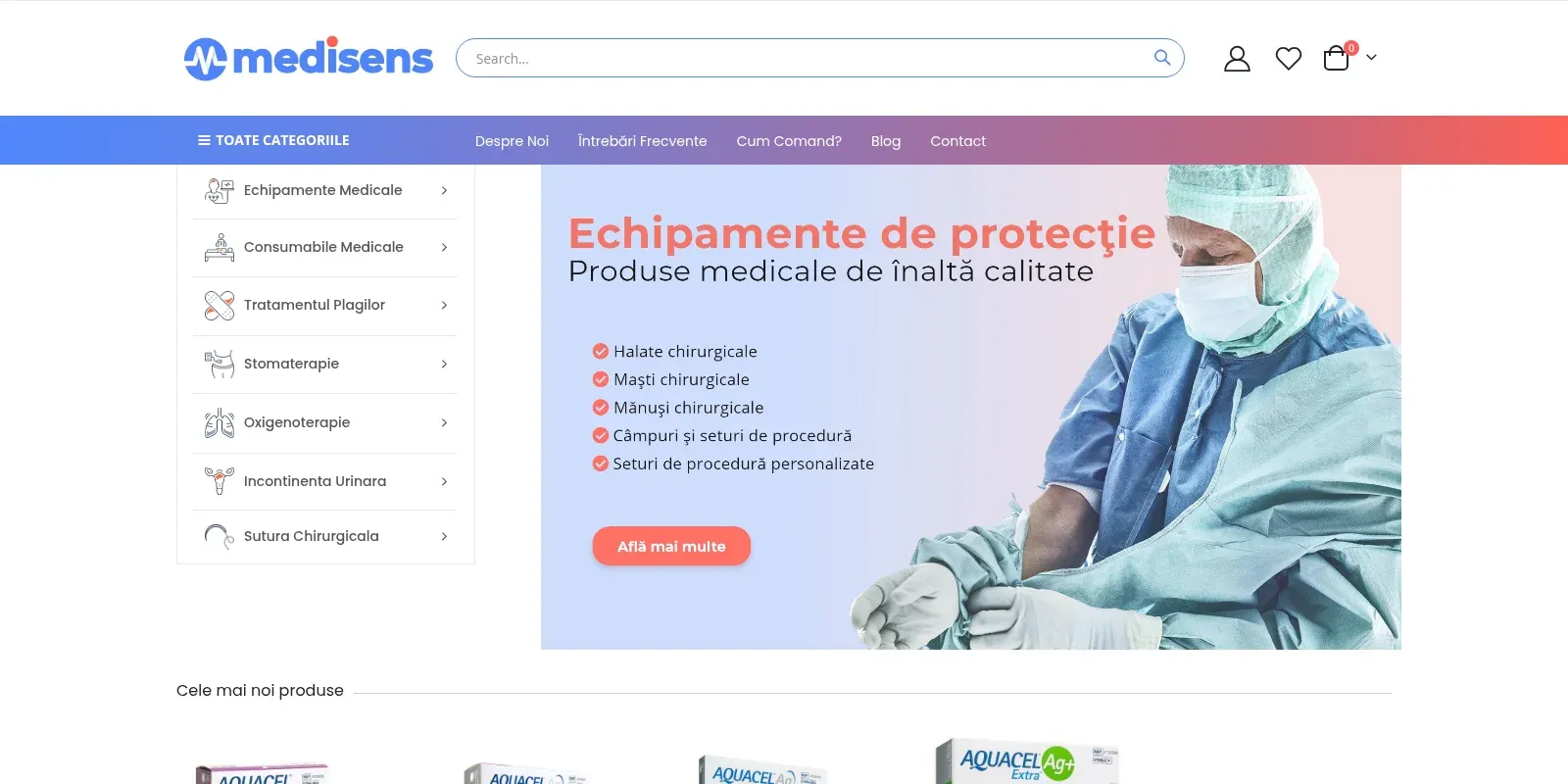
Medisens — medical products webshop with external system integrations
Magento 2 store for a distributor of medical products to hospitals and patients — wound care, incontinence, operating-theatre equipment, oxygen therapy, sutures, stoma care — connected to the company’s external business systems so stock, prices and orders stay in sync.
Magento 2Porto themePHPMySQLView case study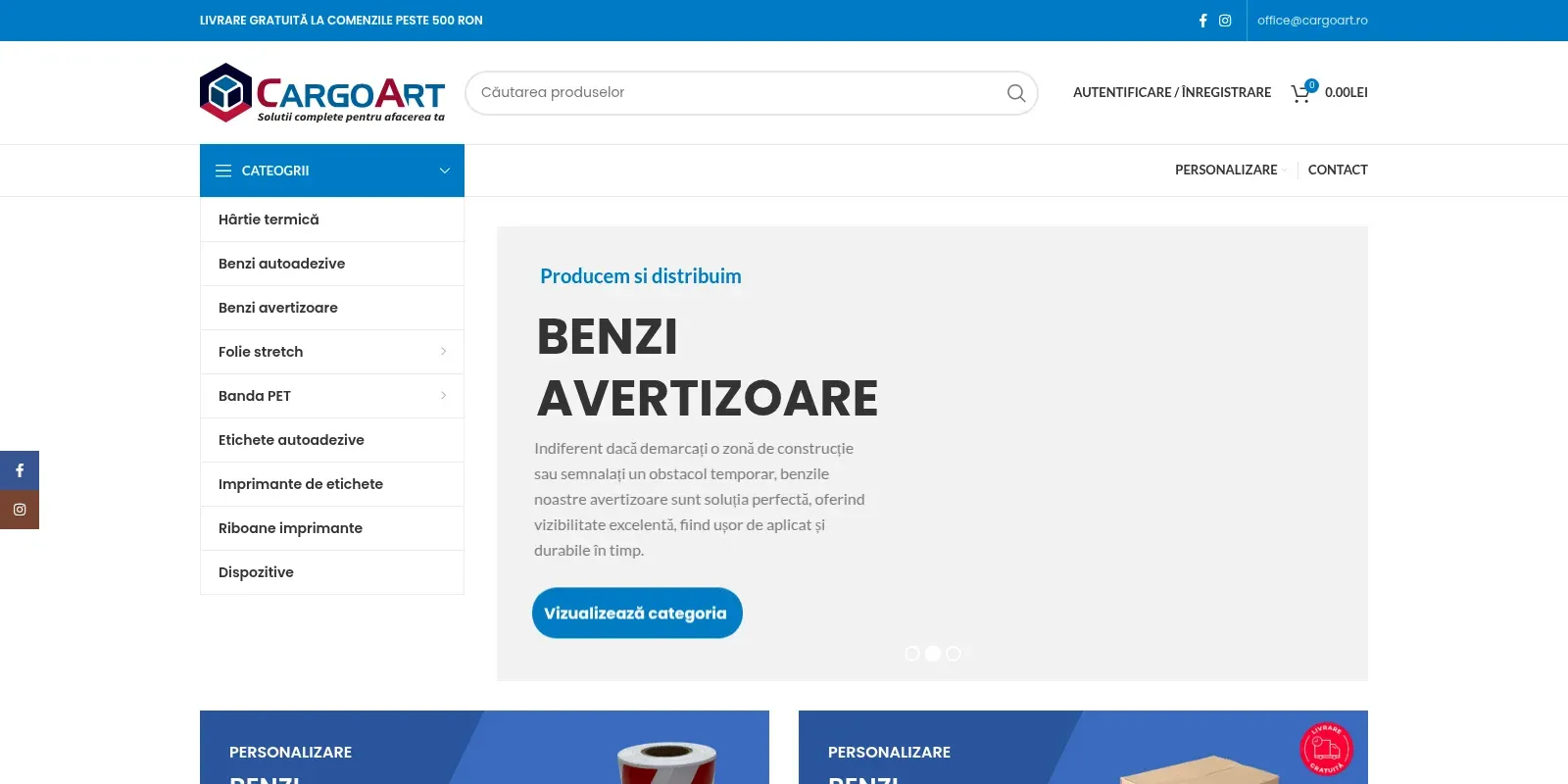
Cargoart — packaging supplies webshop with custom-printed tapes
WooCommerce store for a producer and distributor of packaging materials — thermal paper rolls, adhesive and warning tapes, stretch film, strapping, labels and label printers — including personalised printed tapes ordered online.
WordPressWooCommerceWoodmart child themeWPBakeryView case studyRequest a quote
Describe what you need. The enquiry goes to our team, and we reply by email with the next step.