

Custom software · SaaS
Custom software development company in Romania
In shortWeDevelop is a Romanian software company that builds custom web applications, internal platforms, client portals and SaaS products for businesses in Romania, the EU, the UK and North America. It fits companies whose process no standard product covers, or founders turning expertise into a subscription service, and it starts with a paid discovery phase rather than a guess.
At a glance
- Provider
- WeDevelop, a software company from Romania
- Clients
- Romania, the EU, the UK and North America
- Languages
- English and Romanian
- Invoicing
- EUR, GBP or RON
- Pricing
- Quoted after scoping, from your brief
- Contact
- office@wedevelop.ro
01Is this for you
When custom software is the right investment
Most companies should buy before they build. Custom development tends to be justified only when the signs below are true of your business.
- Key parts of the work run on spreadsheets and email because no product covers them.
- Your process is a real advantage, and the available tools would make you work like everyone else.
- You pay for several tools and still retype the same data between them.
- Dealers, suppliers or customers need a portal connected to your ERP or your own data.
- You want to sell your expertise to other companies as a subscription product.
- An old internal application is holding you back, and nobody left in the company can change it safely.
02What you get
What you receive besides the application
A custom system is only an asset if someone other than its authors can run and change it. That is why the deliverables go beyond screens and features.
A written specification
Users, flows, rules, integrations, a risk list and a costed backlog. It is yours whether or not you continue with us.
A first release that ships
A prioritised subset of the system in use early, followed by regular releases based on what people actually do with it.
Integrations
Connections to your ERP, bank, payment provider, identity provider or partner systems, with error handling and monitoring.
Security and quality
Automated tests, code review, audit trails where the business needs them and penetration testing before launch.
Operations
Hosting, logging, alerts, backups and a runbook, so that the system can be looked after in daily use.
Code you can take with you
Your repository and documentation, written so that your own developers or another team can continue the work.
03Which option
Buy, extend or build: an honest comparison
Before you compare suppliers, decide whether you need a supplier at all. We would rather have this conversation at the beginning than after the budget has been spent.
| Route | Best when | Trade-off |
|---|---|---|
| Off-the-shelf SaaS | Your process is ordinary and a product already covers most of it. | You adapt to its workflow, pay for as long as you use it, and cannot add what is missing. |
| Extending your ERP | The data and users already live there, and the gap is a few reports or screens. | You stay tied to the vendor’s upgrades and licensing, and some requirements will not fit its model. |
| Low-code tools | An internal tool for a small group, or a process that is still changing and needs a quick trial. | Permissions, audit trails, integrations and per-user pricing become limits as usage grows. |
| Custom build | The process gives you an edge, or the software itself is what you sell. | The largest initial investment, an owner needed on your side and upkeep for as long as it runs. |
If you do build, there are two common commercial forms: a fixed-scope first release after discovery, or a dedicated team on a monthly basis once the product has settled into continuous development.
04Cost
What decides the cost of custom software
We do not quote a full build from a one-page brief, since that number would mean nothing. Discovery is priced separately for that reason, and the items below shape what comes after it.
| Factor | Why it matters |
|---|---|
| Roles and workflows | Each type of user, with its own permissions and exceptions, multiplies the screens and rules that need testing. |
| Integrations | A partner API with poor documentation can take longer than the feature it serves, and every link needs error handling. |
| Existing data | Years of records in spreadsheets or an old database have to be cleaned, mapped and checked before go-live. |
| Compliance and security | Sensitive data, audit trails, verified users or data residency add design and testing work from the first release. |
| SaaS mechanics | Tenant isolation, plans, billing and self-service onboarding are a substantial product before your own feature set even begins. |
| Scope of the first release | This is the factor you control most directly, and a sharper first release gets you to real feedback sooner. |
Plan for the running cost too: hosting, monitoring and continued development under a maintenance plan with a known monthly cost, which you will see before you commit to the build.
05How to start
How a custom software project starts
A conversation
A call about the problem. If software is not the answer, or we are not the right company, we will say so.
Discovery
A paid, fixed-price phase that produces the specification, architecture, risk list and costed backlog.
First release
Working software on a staging environment every two weeks, tested by your people, with the scope adjusted on evidence.
Run or hand over
Launch, then a support agreement for monitoring, patching and new features, or a clean handover to your own team.
06For an accurate quote
What to include in your request
You do not need a specification, because producing one is the purpose of discovery. A plain description of how things work today is more useful.
- The process as it runs today, including the spreadsheets and workarounds.
- Who the users are and what each group has to get done.
- The systems the software has to read from or write to.
- Constraints: compliance, hosting location, deadlines and a budget range.
- Who on your side can make decisions about priorities during the project.
07Questions
Questions buyers ask about custom software
How much does custom software cost?
The build is priced after a fixed-price discovery phase, because the cost depends on roles, integrations, data and the scope of the first release. At the end of discovery you have a costed backlog and can choose a fixed-scope first release or a monthly team.
How long does it take to build custom software?
Discovery takes one to three weeks, and the length of the build is then set by the scope you choose for the first release. Working software appears on staging every two weeks, so you are not waiting until the end to find out whether the assumptions were right.
Should we build custom software or buy an existing product?
Buy if a product covers most of your process and the remainder can be worked around at a reasonable cost. Build only if the process sets you apart, the gaps keep costing you time or errors, or the software is itself what you plan to sell.
What happens if we stop working with you?
You keep the code, the documentation and the infrastructure setup, and another team can continue from there. The handover is designed for this situation, which is why the system is documented while it is built rather than explained from memory on the way out.
Can you build a SaaS product for our company to sell?
Yes, and Smatch is an example: a two-sided marketplace with bidding, in-browser 3D preview, Stripe payments and international payouts. The tenancy model, data isolation and billing are decided early and deliberately, because those are the choices that cost the most to change later on.
Can you replace an old internal application without stopping the business?
Usually yes, by replacing it in phases rather than switching everything over on one day. The old and new systems run side by side for a period, with data synchronised between them, so each department moves when its part is ready and tested.
08Related projects
Work we have done in this area
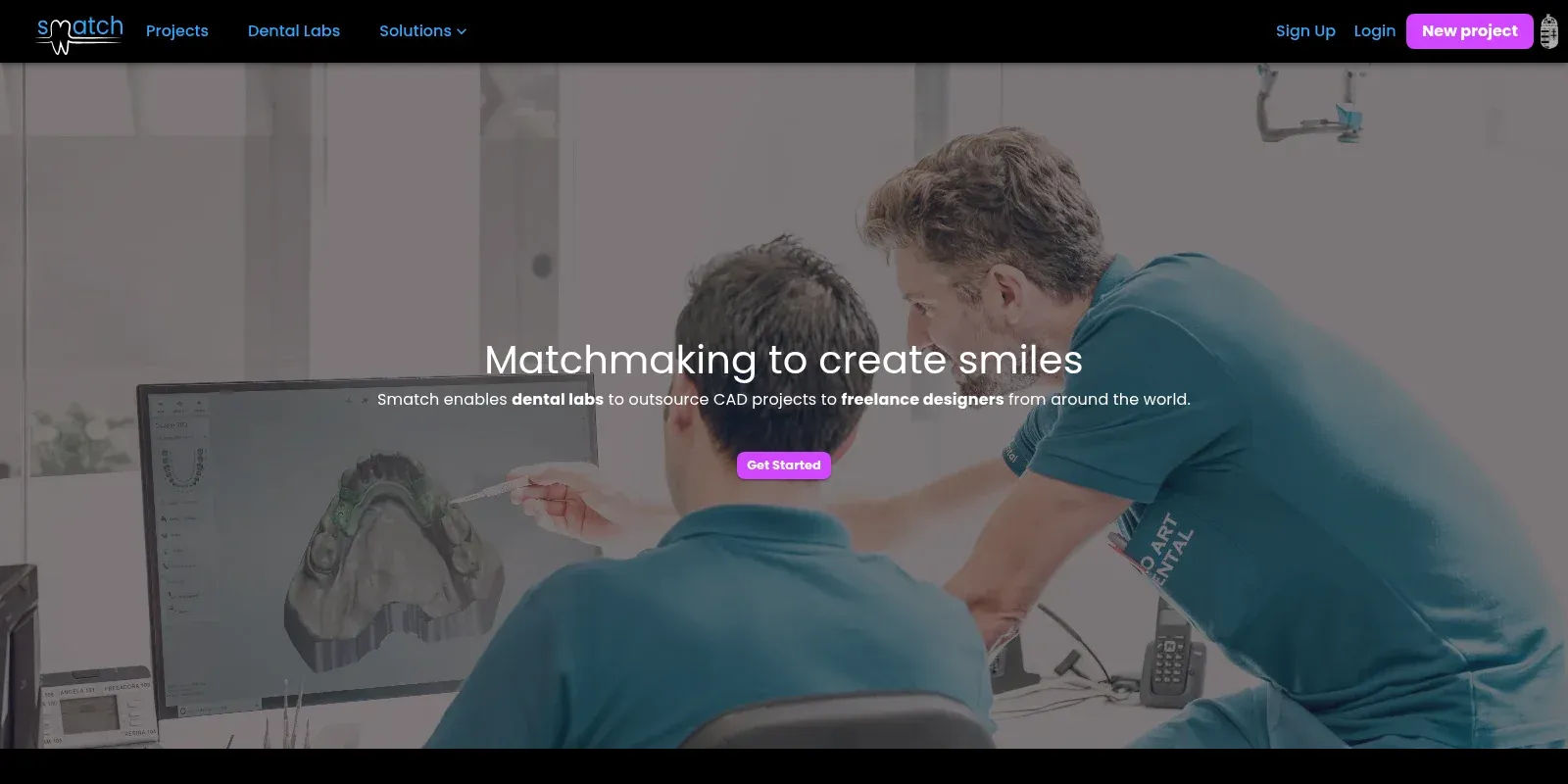
Smatch — global marketplace for dental CAD design
A two-sided platform where dental labs post CAD design jobs and freelance designers from around the world bid, deliver and get paid — with 3D preview, per-project chat and milestone payments.
Next.jsReactWebGL 3D previewStripeView case study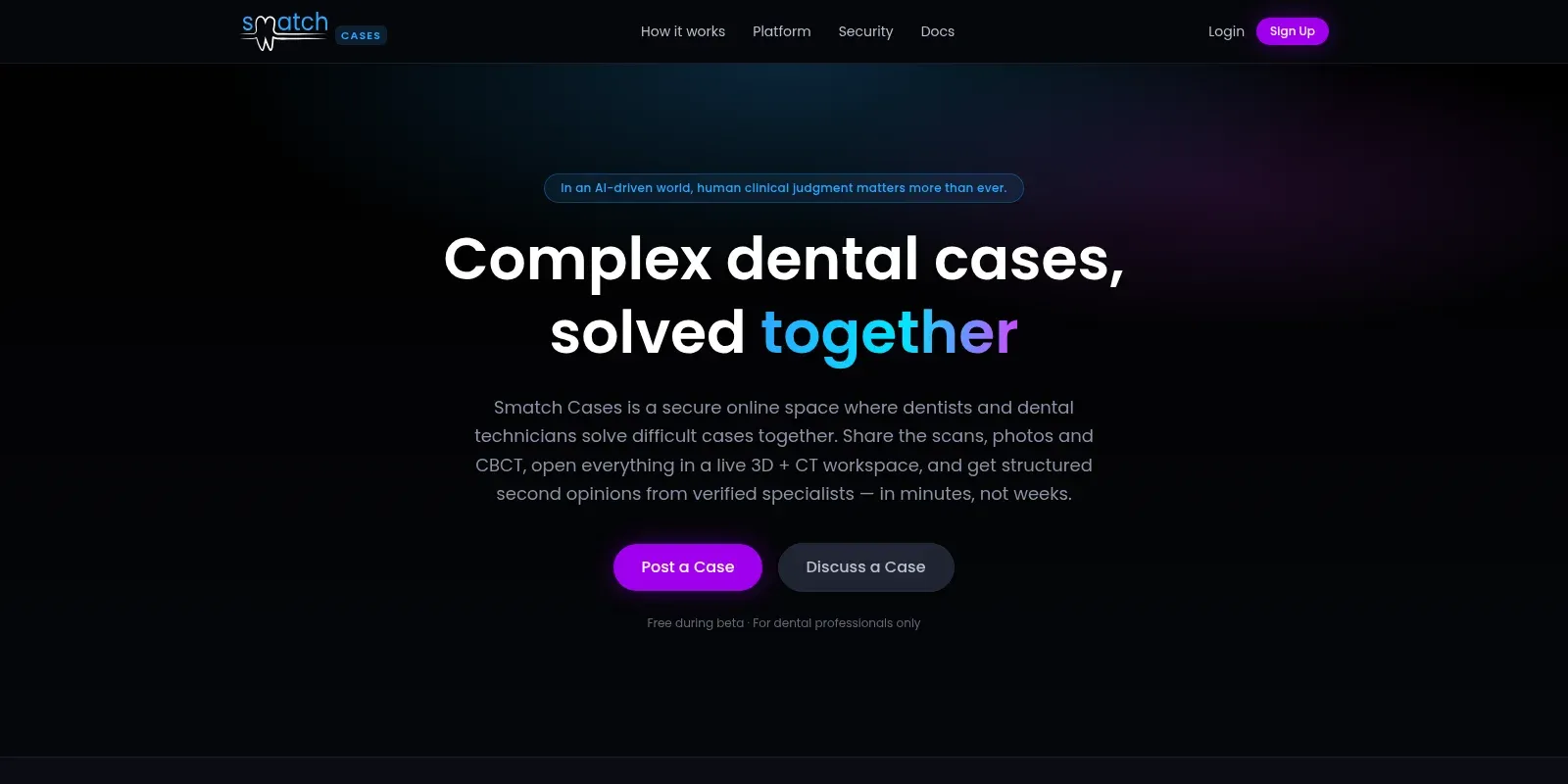
Smatch Cases — clinical case collaboration with a live 3D + CT workspace
A secure platform where dentists and dental technicians solve complex cases together: upload scans, photos and CBCT, open them in a layered 3D + CT viewer in the browser, and collect structured second opinions from verified specialists.
Next.jsReactThree.js / WebGLCBCT volume renderingView case studyRequest a quote
Describe what you need. The enquiry goes to our team, and we reply by email with the next step.