

Nearshore inside the EU
Nearshore software development for Germany, the Netherlands and the EU
In shortWeDevelop is a Romanian software company that works as a nearshore development partner for companies in Germany, the Netherlands and the rest of the EU, in English and one hour ahead of Central European Time. Because supplier and client are both inside the EU, GDPR applies directly with no data-transfer mechanism, and B2B invoices normally fall under the VAT reverse charge.
At a glance
- Provider
- WeDevelop, a software company from Romania
- Clients
- Romania, the EU, the UK and North America
- Languages
- English and Romanian
- Invoicing
- EUR, GBP or RON
- Pricing
- Quoted after scoping, from your brief
- Contact
- office@wedevelop.ro
01Is this for you
When an EU buyer should look at Romania
The main reason to stay inside the EU is that several difficult questions never come up. It works well for buyers in these positions.
- Local recruitment for Magento, Next.js or DevOps engineers takes months, and the roadmap will not wait.
- Your data protection officer would rather not review transfers to a third country.
- You are an agency with overflow work, and you want it delivered under your name, by people in your working day.
- Your team already works in English, in code, tickets and meetings.
- Procurement wants a framework agreement under your own law, with an EU company on the other side.
02What changes
What buying from inside the EU changes in practice
These are the points where an EU supplier differs from one outside it, along with the limits you should know about.
Same working day
Romania is one hour ahead of Berlin, Vienna, Amsterdam, Brussels and Paris. A stand-up at nine your time is at ten here, so questions get answered the same day.
GDPR without transfer paperwork
Both sides are under the same regulation, so standard contractual clauses for a third country are not part of the deal. We sign a data processing agreement for every engagement.
VAT reverse charge
For cross-border B2B services inside the EU, the customer generally accounts for the VAT. You supply a valid VAT number, and your tax adviser confirms the treatment.
Your law or ours
The framework agreement can sit under Romanian law or your own jurisdiction, and we are willing to work from your paper. Invoices are monthly, in EUR.
Security questionnaires
NIS2 reaches many suppliers through customer contract clauses. Our ISO 27001 system answers most of what such a questionnaire asks.
Language limits
We work in English and Romanian. We do not offer German, Dutch or French, so those texts, and any calls in them, stay with you.
03Which option
Local hire, Romanian nearshore or offshore outside the EU
An honest comparison has to start with the local options, because for some teams they remain the right answer.
| Option | Fits when | Trade-off |
|---|---|---|
| Local hire or contractor | The role is permanent, needs your language every day or involves being on site. | Long recruitment in a tight market, full employer costs and notice periods that are costly to reverse. |
| Local agency | You want a partner who shares your language and legal culture and can come to your office. | Often the most expensive external route, and larger agencies may subcontract the work anyway. |
| Nearshore in Romania | You want senior capacity in your working day, an EU contract and GDPR by default. | English rather than your language, remote by default, and a different calendar of public holidays, including Orthodox Easter. |
| Offshore outside the EU | The specification is stable, the volume is high and you can work with handovers across time zones. | Few shared hours, and any personal data needs a transfer mechanism and a closer look from your DPO. |
If your product documents, support or daily team meetings must be in German, Dutch or French, Romania through us is not the right choice for those roles. A mixed setup, with a local lead and our engineers behind them in English, usually removes the problem.
04Cost
What decides the cost for an EU buyer
We quote per role after a short call, and rates depend on the work. These are the points specific to a cross-border EU engagement.
| Factor | Why it matters |
|---|---|
| Seniority and stack | An Adobe Commerce lead and a QA engineer are priced differently, and the mix defines the monthly figure. |
| Engagement model | An embedded engineer, a dedicated team with a tech lead or a fixed-scope project each carry different overheads. |
| Your local baseline | Employer contributions, recruitment fees and severance exposure in your country are what you are really comparing against. |
| Compliance work | A long security questionnaire, your own contract paper or work restricted to your infrastructure add onboarding effort. |
| Meeting in person | We travel for kick-offs, workshops and quarterly reviews where the engagement justifies it, so agree what is expected. |
Set the monthly quote against the full cost of an equivalent local hire in your market, with everything from equipment to management time counted. We would rather you did that sum with your own numbers than rely on a percentage from us.
05How to start
From first call to first sprint, for an EU company
Scoping call
Thirty minutes in English on the work, the stack, the seniority and how your team runs its sprints.
Profiles and interviews
CVs and code samples for the actual people, followed by interviews you run yourself.
Paperwork
Framework agreement in your jurisdiction or ours, NDA, IP assignment and a data processing agreement, plus your VAT number for invoicing.
First sprint
The engineer joins your sprint in your tools, and the first month runs as a mutual trial.
06For concrete profiles
What to tell us in your first message
A few lines are enough. The last two points are the ones EU buyers tend to overlook.
- The stack, the product area and the number of engineers you have in mind.
- The language of your code, tickets and daily meetings.
- Your preferred jurisdiction, and whether you want to use your own contract.
- Whether a works council, procurement team or data protection officer has to sign off.
- Whether your own customers impose NIS2 or other security clauses you must pass down.
07Questions
What German, Dutch and other EU buyers ask
How much does nearshore development in Romania cost for a German company?
Rates depend on seniority and stack, and we quote per role after a short call rather than publishing them. Compare that quote with the full cost of a local hire, including employer contributions, recruitment fees and the cost of ending the contract.
How fast can a nearshore engineer start?
Typically inside two weeks from the first call, with profiles arriving in a few days. In an EU engagement the paperwork is usually light, unless your legal team wants to review its own contract or a works council needs to be involved.
Do your engineers speak German or Dutch?
No, we do not offer German or Dutch, and our working languages are English and Romanian. All engineers we place work in English daily, so this suits teams that already run in English, and less so those with German-only tickets or meetings.
Do we pay VAT on invoices from a Romanian company?
Normally the invoice carries no Romanian VAT, because cross-border B2B services inside the EU generally fall under the reverse charge and you account for the VAT yourself. This is a general description rather than tax advice, so confirm it with your adviser.
Is staff augmentation from Romania allowed under German labour-leasing rules?
It depends on how the work is set up, so have your counsel check it. Germany regulates the supply of workers under the AÜG, and day-to-day direction of external staff is what raises the question. A team owning a defined scope is a common alternative, and this is not legal advice.
Do you already have clients in Germany or the Netherlands?
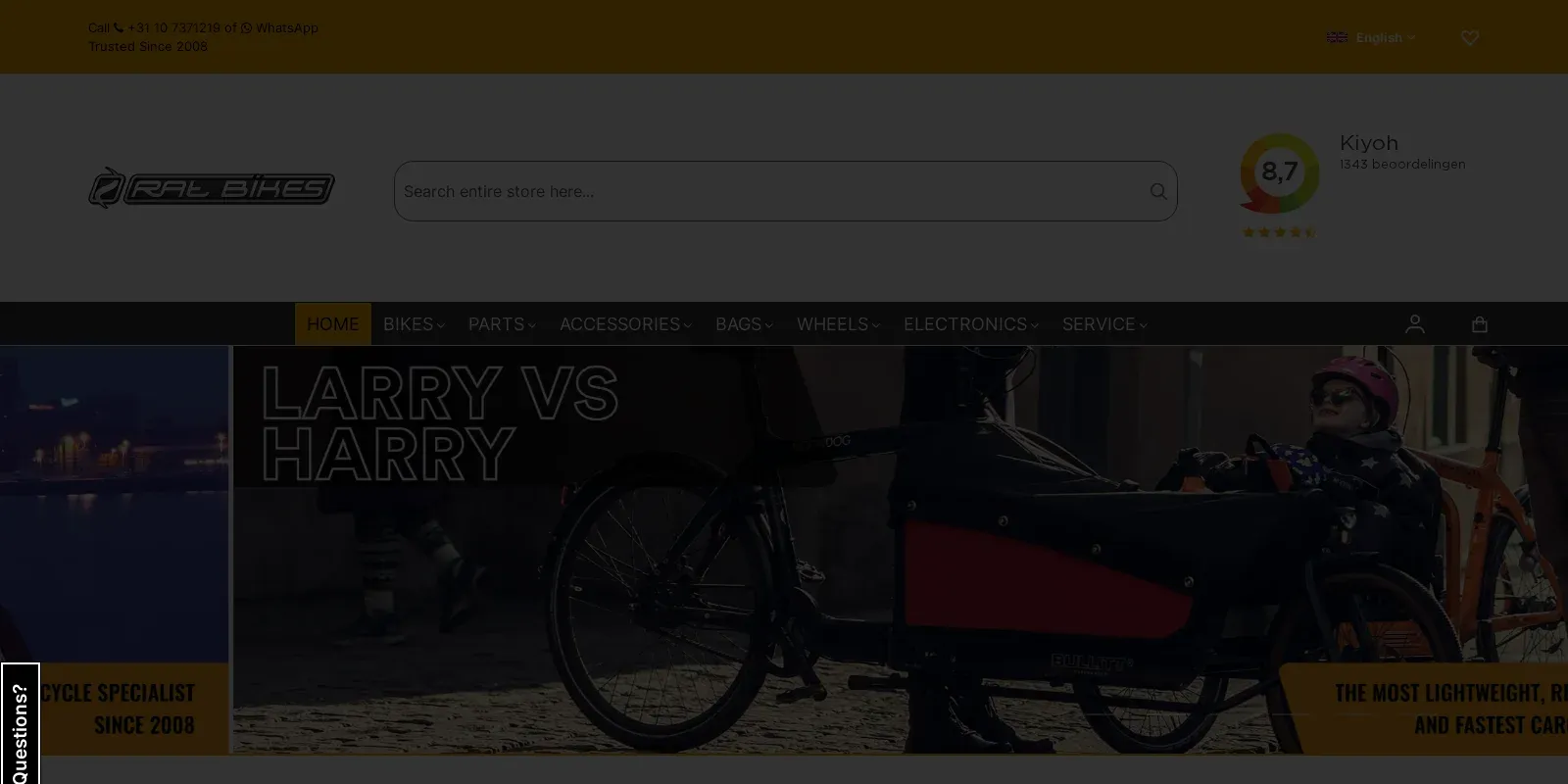
Yes, agencies in Germany and the Netherlands use us for Magento, Next.js and DevOps overflow, under white-label terms that keep them unnamed. Our public example is Rat Bikes in Rotterdam, whose Magento 2 store we maintain. We did not build that store.
What is different about GDPR when the supplier is in Romania?
In terms of the regulation, very little, since Romania is in the EU and no adequacy decision or transfer clauses are needed. You still need a data processing agreement, and we can restrict work to your own infrastructure where the data is sensitive.
08Related projects
Work we have done in this area
Request a quote
Describe what you need. The enquiry goes to our team, and we reply by email with the next step.